- Details
With the arrival of autumn rains combined with temperatures exceeding 20°C, the proliferation of insects, particularly the Culex mosquito, increases, with an increase in its breeding sites.
This mosquito is the vector for transmission of the West Nile virus between birds (migratory and sedentary), which act as reservoirs for the virus.
Also, the mosquito harboring the virus transmits it by bite to humans, causing flu-like symptoms, and to other domestic mammals, including horses, causing fever and nervous disorders.
These accidental hosts are epidemiological dead ends for the disease and therefore do not contribute to the spread of the virus, and there is no transmission of the virus between humans or horses.
In Tunisia, West Nile fever has been diagnosed in humans and horses since 2003. In recent years, the disease has been confirmed by laboratories in humans and horses (the latest in 2024), with cases of mortality or sequelae of nervous system damage.
West Nile fever is a notifiable disease that does not place the horse in isolation or quarantine the stable.
How to recognize the disease
"My horse is behaving strangely" including:
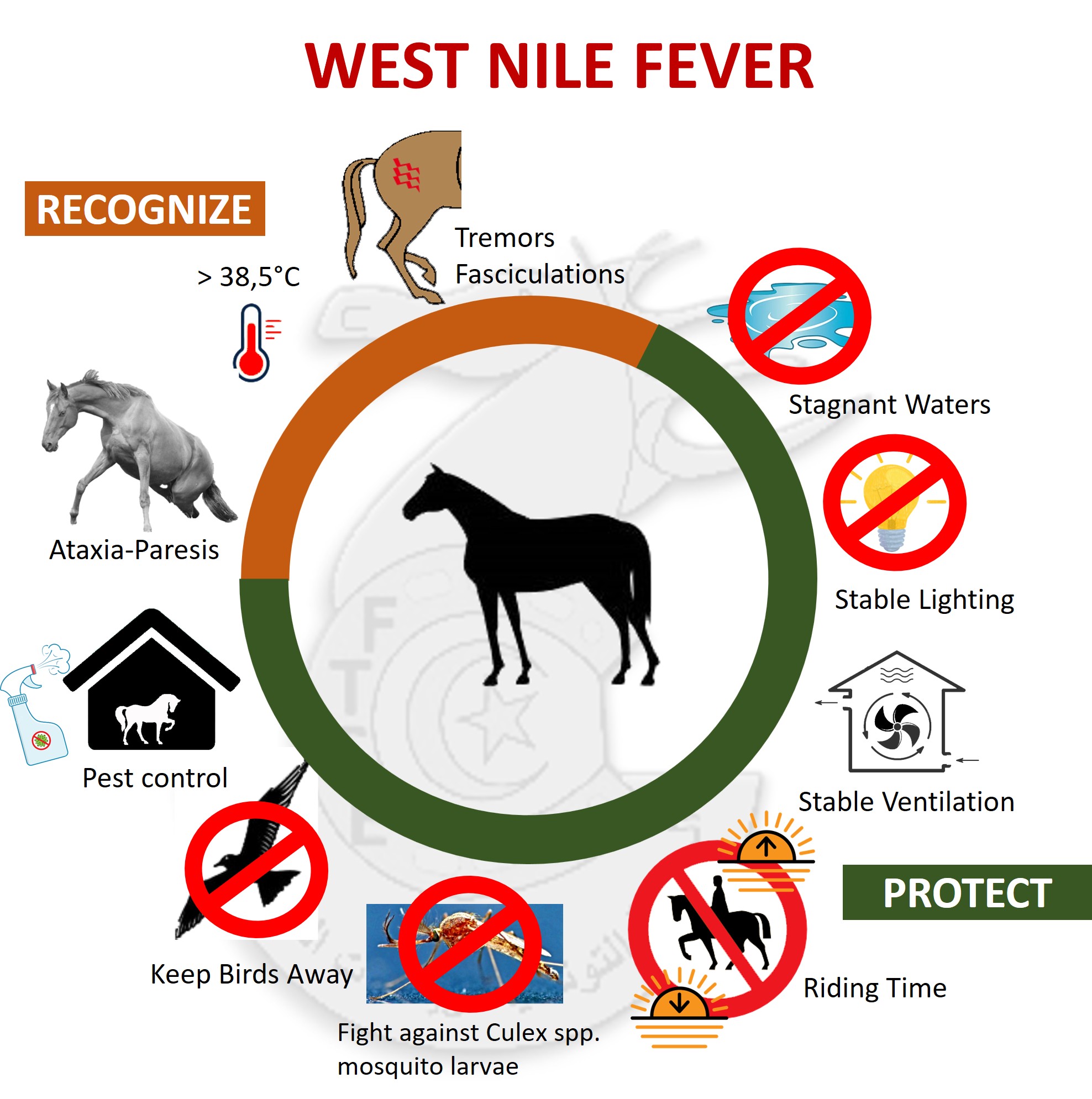
- Ataxia (impaired coordination of movements) and locomotor difficulties that can lead to paralysis,
- Depression or, conversely, hyperexcitability, as in rabies, but without hypersalivation. This is why West Nile fever is often diagnosed in the laboratory after rabies is suspected,
- Muscle tremors,
- Hyperthermia (temperature > 38.5°C) and a decline in general condition.
Cases recover within 20 to 30 days, with sequelae that can persist for up to 6 months after infection.
How to combat this disease
The vaccine against this disease has proven effective in countries where it is marketed, which is not the case in Tunisia.
Other preventive measures are employed and consist of minimizing horses' contact with mosquitoes during high-risk periods (i.e., summer and autumn):
- Bring horses inside closed buildings before the end of the day and take them outside after dawn (i.e., outside periods of peak mosquito activity).
- Place mosquito nets at the entrances to stables.
- Natural or dynamic ventilation of stables,
- Avoid lighting the boxes and the stable,
- Install insect traps in stables and/or the surrounding environment and use larvicidal insecticides,
- Eliminate migratory bird nests, place chicken coops and ornamental birds away from stables,
- Use repellents on horses, while changing the molecules to prevent insect resistance.
- Limit stagnant water as much as possible (tarpaulins, ruts, trampling areas, flowerpots, tires, etc.).
- Clean water troughs regularly.
- Install a full, fine-mesh mosquito net cover impregnated with a repellent product.
- Details
In order to protect the health of horses and combat the spread of contagious equine diseases among horses participating in equestrian sports events organised by the Tunisian Equestrian Sports Federation or in competitions organised under its supervision, and following the availability of the vaccine against equine rhinopneumonitis in Tunisia (combined vaccine with equine influenza), it will be mandatory, with effect from 1 June 2026, for all horses participating in national and international sporting events to be vaccinated in accordance with the vaccination schedule against infectious diseases in horses (equine influenza, equine rhinopneumonitis and rabies).
Furthermore, the Tunisian Equestrian Sports Federation invites the presidents of the equestrian sports associations affiliated to it to attach the utmost importance to this matter and to raise awareness amongst their members and supporters regarding compliance with preventive measures relating to biosecurity procedures, in order to ensure the continuity of sporting activities throughout the sporting season.
Sanctions will also be applied for any violations observed. For further details, click HERE.
- Details
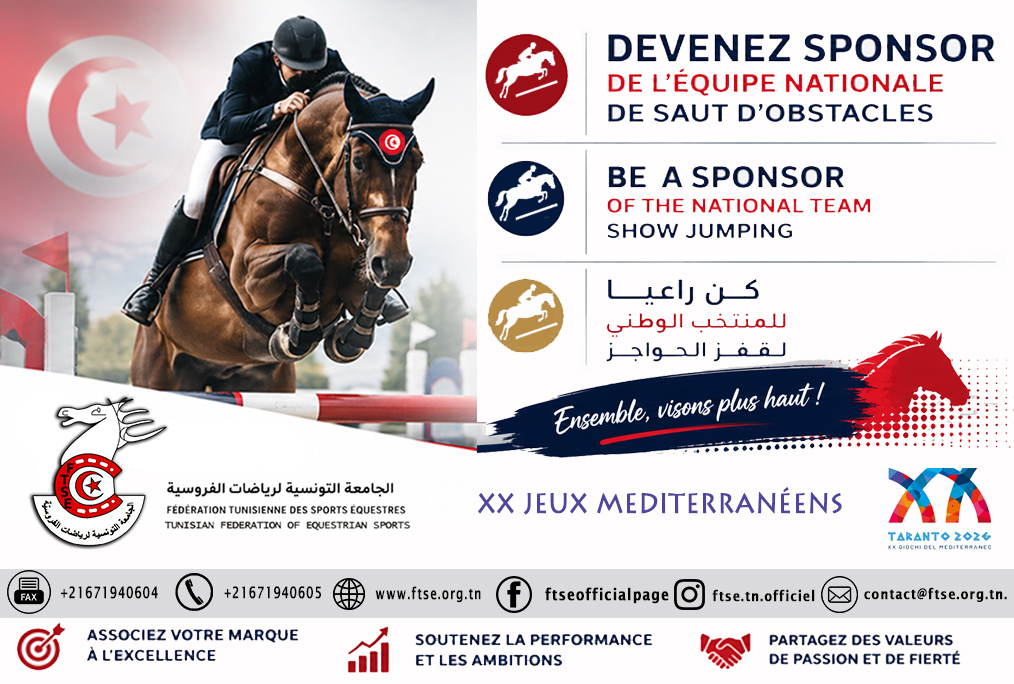
Our National Team of Jumping will participate in the upcoming 20th Mediterranean Games, to be held in Taranto, Italy, from 21 August to 3 September 2026.
During these Games, 5 team sports and 27 individual sports are scheduled, including equestrianism.
This Olympic event will be covered by international television and radio stations and the print media, which will guarantee high media visibility for our partners.
The Tunisian Equestrian Sports Federation offers sponsors of the National Team three packages:
PREMIUM PACKAGE: 30.000,000 dinars
GOLD PACKAGE: 10.000,000 dinars
SUPPORT PACKAGE 5,000,000 dinars
Through your commitment as a sponsor of Tunisian equestrian sports, you will help inspire our young riders, develop the sporting experience of our elite riders and improve their international rankings. You will also benefit from a prestigious image associated with horse riding and the presence of your company on equipment, videos, events, media, international representation and promotion to a premium audience (sports associations, families, athletes, companies).
For more information, download the sponsorship file HERE.
- Details
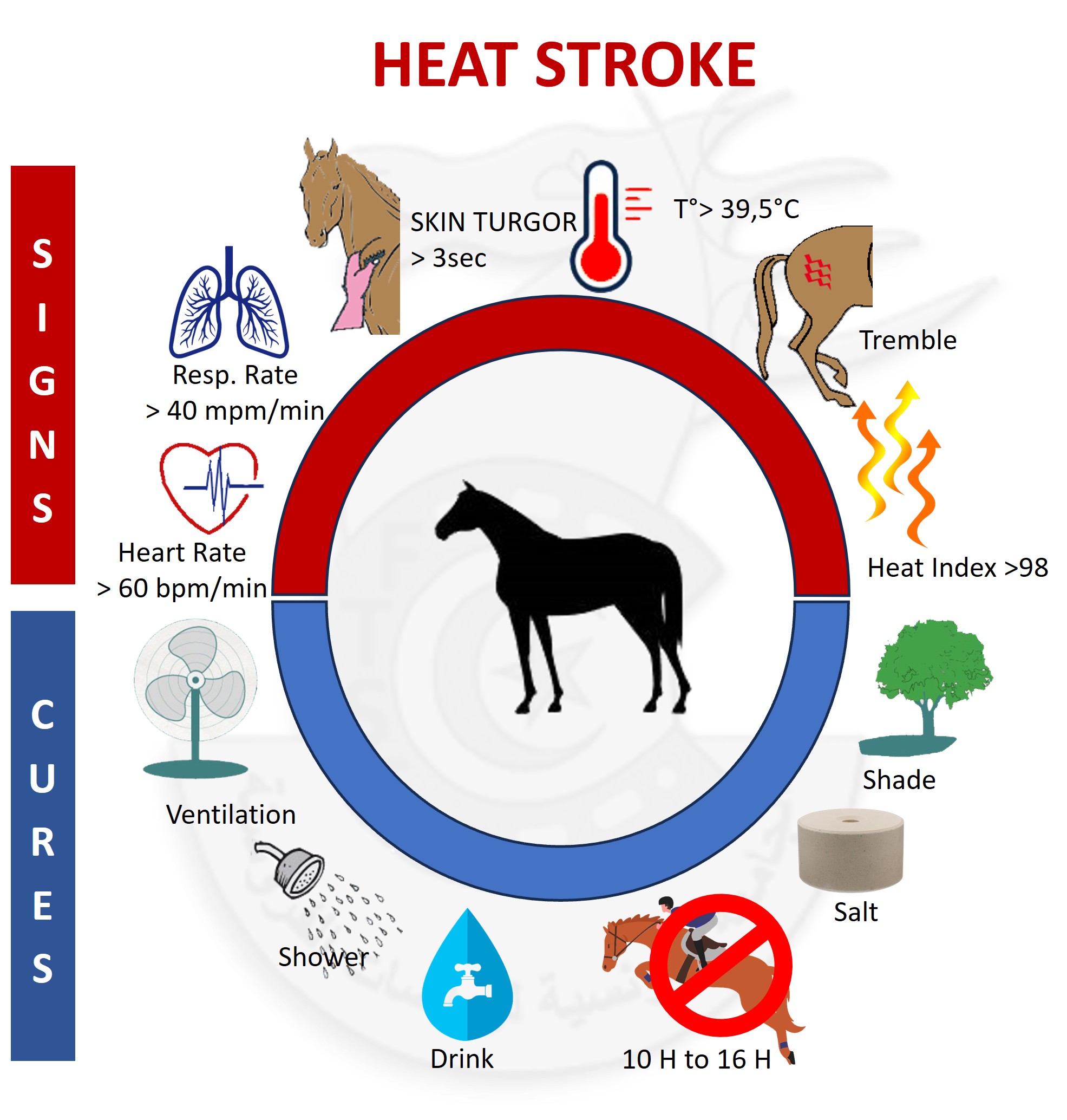
With rising summer temperatures accompanied by high humidity during the day and night where the heat index (the sum of recorded temperature and humidity) exceeds 98, you should closely monitor your horse for the following warning signs of heat stress:
- rectal temperature above 39.5°C;
- rapid respiratory rate over 40 bpm, elevated heart rate over 60 bpm at rest;
- profuse or absent sweating;
- sudden fatigue, muscle tremors, dry gums with a filling time exceeding 3 seconds;
- dehydration with a skin fold that lasts more than 3 seconds.
- dark urine, prostration, loss of appetite.
Prevention is better than cure:
- Provide fresh water day and night, to which 30 to 60 g are added per day, and electrolytes by soaking hay or pellets.
- Showers and ventilation with misters are recommended, allowing for a rapid drop in body temperature. - Provide shaded and well-ventilated shelters, whether in a paddock or a stable.
- Avoid sporting activities between 10 a.m. and 4 p.m.
- Transport: a risk that increases the risk of heat stroke, and therefore, ensure maximum ventilation with stops every 1.5 hours, misting with water and electrolytes at each stop, and avoid journeys between 11 a.m. and 6 p.m.
- Details
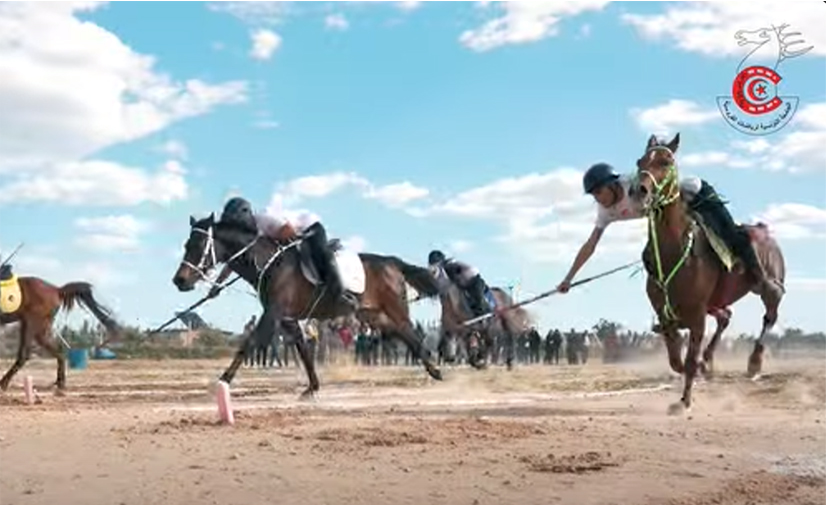
On Saturday 28 March 2026, the Aziz Club in Sfax hosted an entertaining demonstration by the riders of the Hraier Nafzaoua association, led by their coach Ridha Chahbani, who showcased their mastery of this traditional sport.
This demonstration was accompanied by technical explanations provided by Mr Noureddine Baroudi on the technical rules of the sport and the conduct of its races.
In addition to the President of the Tunisian Equestrian Sports Federation, Mr Mounir Abichou, several members of the Federation’s executive committee were present, as were riders from the regions of Kef, Kasserine and Sfax, along with a large local audience, who attended the demonstration and showed keen interest in the sport.
A big thanks to the whole team for their energy, dedication and passion for the sport, and we look forward to seeing you at the next demonstration in Tunis.
For further information, click on the link www.facebook.com/reel/1639541580522126
For the photo album, click on the link https://ftse.org.tn/en/mlibrary/pictures/tent-pegging-in-sfax
- Details
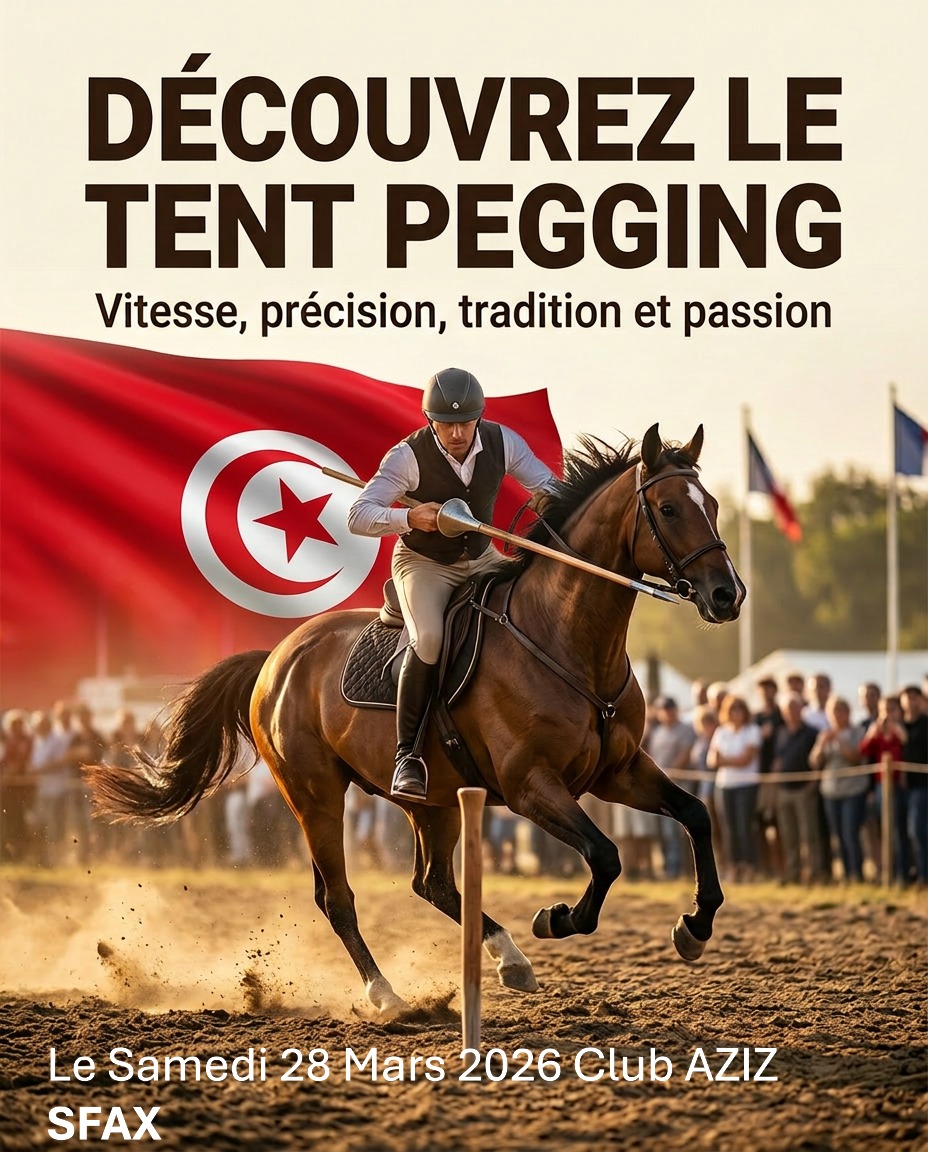
As part of its efforts to promote the sport of tent pegging, the Tunisian Equestrian Sports Federation is organising a practical demonstration of the sport in collaboration with riders from the Hrayer Nefzaoua Sports Association, on Saturday 28 March 2026 from 2 pm at the Club Aziz in Sfax.
This demonstration will be followed by a meeting with representatives of equestrian sports associations to review the specific requirements of this sport and to work towards launching competitions in this discipline during the current sporting season, so that Tunisia can join the other North African countries in this sport.
A chance to discover a new equestrian discipline... we hope to see as many of you as possible.
For more information, click HERE.
- Details
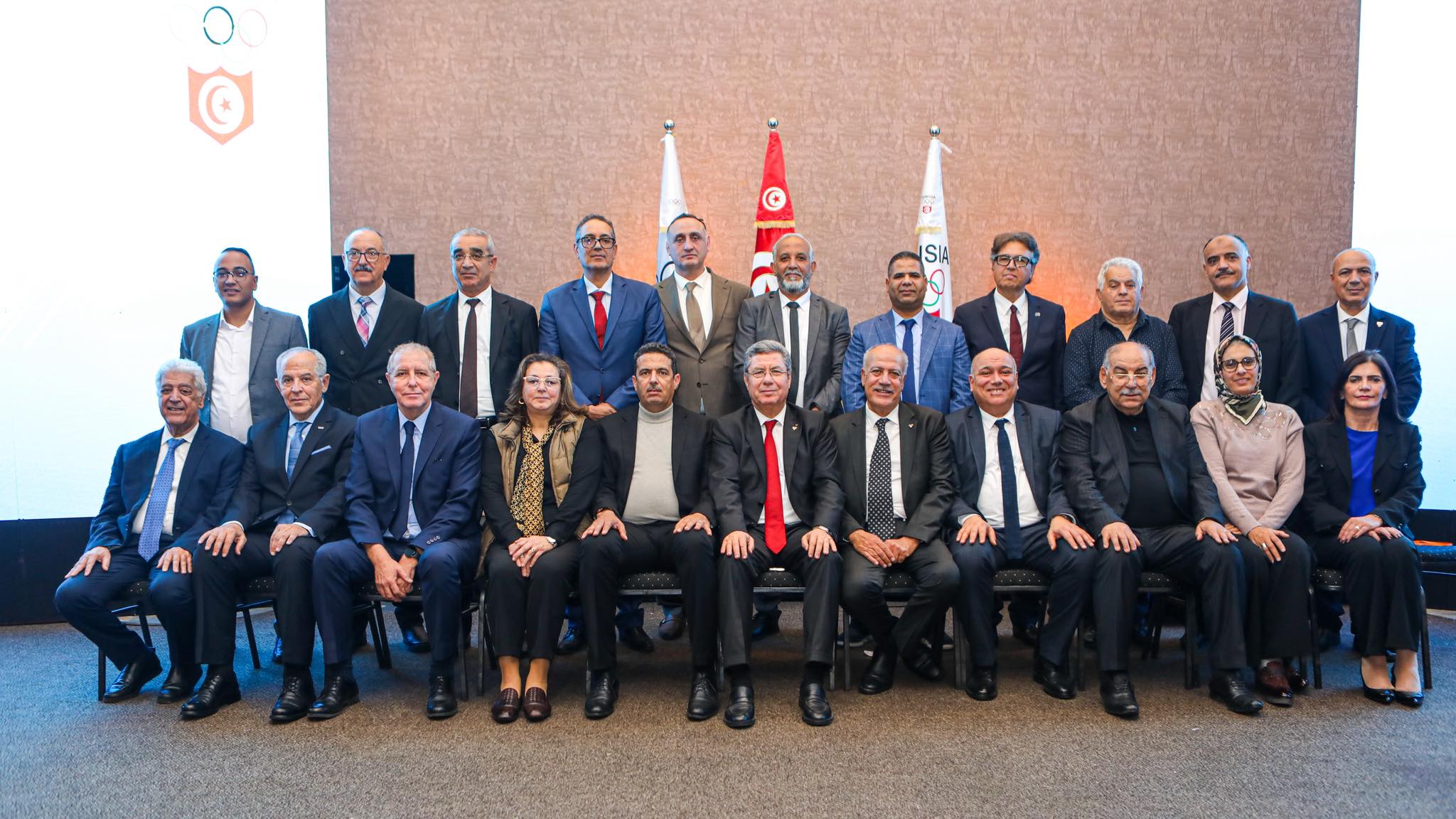
Mr Hatem MARNAOUI was elected as the member representing the Olympic sports federations on the Executive Committee of the Tunisian National Olympic Committee at the general election meeting held on the evening of Friday 26 December 2025 in the capital Tunis.
The election of our former FTSE President is a first and a boon for equestrian sport in Tunisia. We wish him every success in his new function.